





How to Deal with Haters: 8 Habits of Emotionally Resilient People
Somebody is going to say something about you this week that stings longer than it should. Not a knife to the chest. A paper cut. A backhanded compliment in a meeting. A comment under a post. A "just being honest with you" from a relative who has never once been honest about themselves.
And then you will spend the next four hours thinking about it instead of doing the thing you were excited about that morning.
That is the real cost, and there is research showing exactly how it works. In three controlled experiments published in the Academy of Management Journal, organizational psychologists Christine Porath and Amir Erez found that a single rude encounter measurably reduced people's performance on routine tasks and creative tasks, and made them less willing to help anyone afterward. The insult itself was not what did the damage. The damage came from how the incident hijacked their attention and scrambled their thinking long after the moment ended.
Read that again, because it reframes the entire problem. Haters do not beat you. They rent space in your head and you keep paying. Which means learning how to deal with haters is not about growing thicker skin or firing off the perfect comeback. It is about controlling your own attention.
I learned this the hard way. I hit rock bottom as a teenager, rebuilt from nothing, and eventually sold a company for over $300 million. Along the way I got very familiar with the sound of people explaining why it would not work. The ones who got to me were never the loudest. They were the ones I was already half-agreeing with. That is the part nobody tells you: a hater only lands a punch where you were already bruised.
So let's fix the bruise, not the punch. Here is exactly how to deal with haters using eight habits that hold up whether the criticism is coming from a coworker, a cousin, or a stranger with an anime avatar.
Upgrades You'll Receive From This Guide:
A clear answer to what are haters actually doing, and the psychology driving it
A field guide to jealous haters and why your progress reads as a threat to them
Exactly when to engage and when to ignore the haters completely
A practical playbook for how to deal with haters at work without torching your career
A softer, harder script for how to deal with haters in your family, where you cannot just walk away
Eight repeatable habits that convert criticism into usable data instead of internal damage
What Are Haters? Understanding Who They Are and Why They Do It
Haters are people who direct persistent negativity at someone else's progress rather than engaging with it honestly. Unlike critics, who respond to the work, haters respond to the threat your success poses to their own self-image. Most hate is an envy signal, not an accurate assessment of your ability.
Often, jealous people struggle with own insecurities and negative thoughts that they project onto others. These hurtful comments and negative behavior stem from their internal struggles, which limit their ability to stay motivated and focus on their own lives.
Some haters disguise their intentions by posing as someone with your best interest at heart, using manipulative positive feedback that is actually criticism. They may be harmful to your mind, hurt your confidence, or impact your grades, ultimately restricting you from achieving your goals and living your best life.
This type of person might use backhanded compliments, sarcasm, or subtle criticism, hoping to make you feel bad while appearing supportive.
Understanding the Root of Haters' Behavior: Why People Hate and How it Affects Us
Haters often feel threatened by your presence, achievements, or how you shine bright in your own life. They may harbor jealousy because your success reminds them of what they lack.
There is a well-documented mechanism behind this. In a landmark review in Psychological Bulletin, psychologists Richard Smith and Sung Hee Kim mapped how envy forms: it requires an unfavorable comparison to someone similar to us, in a domain we personally care about. That second condition is the tell. Nobody envies a stranger in a field they have no stake in. Jealous haters only appear once you start succeeding at something they secretly wanted for themselves.
Smith and Kim also drew a line between two flavors of envy. One pushes people to close the gap by improving. The other pushes them to close the gap by pulling you down. The second kind is what shows up in your comments, your group chat, and your Thanksgiving dinner. It is not a verdict on your work. It is a report on their scoreboard.
It’s essential to realize that haters are not always easy to spot. They may use satire, dark humor, or even different opinions to hide their true intentions. Sometimes, these individuals are disguised as friends or family members who pretend to offer advice while actually sowing seeds of doubt.
Think of haters as a mirror – they reflect their negative feelings and struggles onto others. Understanding this dynamic can help you see hurtful comments for what they are, giving you the clarity to focus on your own growth without being weighed down by others' anger or jealousy.
Related: How to Stop Complaining

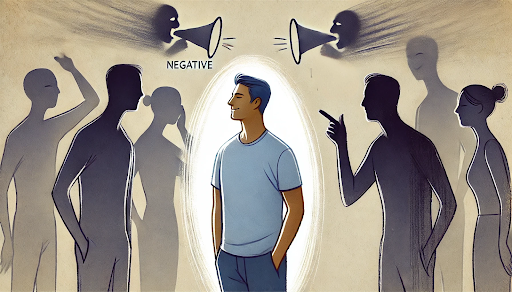
Common Types of Haters You Might Encounter
1. Workplace Haters
The co-worker who minimizes your achievements
The supervisor who consistently provides negative feedback without constructive guidance
Team members acting jealous of your progress
2. Family and Friends
Relatives who dismiss your dreams or choices
Family members who constantly compare you to others
Friends who make hurtful comments disguised as "jokes"
3. Online Critics
Social media trolls leaving negative comments
Anonymous haters hiding behind screens
People who take different opinions to extreme levels
Learn More: How to Be Content With Life
How to Deal With Haters At Work: The Professional's Guide
Workplace hostility is also more common and more expensive than most people assume. In a study published in the Journal of Occupational Health Psychology, Lila Cortina and colleagues found that low-intensity disrespect, the eye rolls and dismissals and public undercutting that never quite rise to the level of a reportable incident, was widespread and linked to lower job satisfaction and greater psychological distress. The stuff too small to report is precisely the stuff that accumulates. That is why how to deal with haters at work needs a system rather than a one-time confrontation.
10 Tactics That Work in a Professional Setting
Keep a paper trail. Forward critical emails to your personal address and note dates and details of verbal confrontations.
Stick to work topics. "Let's focus on the project requirements" stops personal attacks professionally.
Use the 2-minute reset. Take a brief water break when triggered to maintain composure.
Schedule regular supervisor check-ins. Control your professional narrative through consistent communication.
Move difficult conversations to email. "Could you send that feedback in writing?" creates documentation and reduces confrontation.
Create a "wins" folder. Store positive feedback and accomplishments for perspective during tough times.
Practice "grey rock" responses. Keep replies brief, factual, and emotionally neutral.
Find an outside mentor. Monthly meetings provide strategic guidance and emotional support
Master neutral phrases. "I'll consider that" acknowledges without engaging or agreeing.
Position strategically. Stand near allies in meetings and choose workspace locations that minimize negative interactions.
Related: Communication in Remote Work - How to Collaborate Effectively
How to Deal With Haters in Your Family (When You Can't Just Walk Away)
Workplace hostility has an exit. You can transfer, escalate, or eventually leave. Family does not work that way, which is why how to deal with haters in your family is the hardest version of this problem and the one people ask about most quietly.
The dynamic is also different. A coworker who undercuts you is usually protecting status. A relative who undercuts you is often protecting a story about who you were at fifteen. Your growth does not just threaten them, it makes their version of the family narrative wrong. That is why the digs so often target the old you: the flaky one, the dramatic one, the one who was never going to finish anything.
Four moves that work when the hater shares your last name
1. Separate the person from the pattern. You are not deciding whether to keep your uncle. You are deciding whether to keep engaging with one specific behavior. Those are different decisions and collapsing them into one is why family conflict escalates so fast.
2. Shrink the surface area instead of cutting ties. You do not need a confrontation to reduce exposure. Shorter visits, fewer one-on-ones, changing the subject without announcing that you are changing the subject. Most family boundaries work better when they are enacted quietly rather than declared.
3. Stop recruiting them as an audience. A surprising amount of family friction comes from continuing to bring wins to someone who has never once celebrated one. Notice who you are still auditioning for, and stop submitting the tape. If the relationship has become genuinely corrosive rather than just frustrating, our guide on how to heal from a toxic relationship goes deeper than we can here.
4. Replace the confrontation with a repeatable line. "I hear you" plus a subject change, delivered the same way every time, is more effective than one big honest conversation. Consistency does the work that intensity cannot. Families run on habit, and building daily family habits that strengthen the home shifts the default over months in a way no single argument will.
A caveat worth stating plainly: none of this applies to abuse. If a family relationship involves threats, coercion, or genuine harm, that is not a hater problem and the strategies above are the wrong tool. Distance and professional support are.
How to Deal with Haters: 8 Habits That Build Real Emotional Resilience
Everything up to this point has been diagnosis. This is the treatment.
These eight habits work in any context, whether the criticism is coming from a manager, a sibling, or an anonymous account with a cartoon avatar, because they all target the same thing: the attention hijack, not the hater. Build them in order. Each one makes the next easier.
One note before you start. Do not try to install all eight this month. Pick the one matching wherever you are bleeding most right now, run it for two weeks until it stops requiring thought, then add the next. Eight habits attempted at once is zero habits formed.
1. Treat Criticism as Data, Not Verdict
Think of hostile feedback as free market research you did not pay for. When someone attacks your work or your choices, they are pointing at something: sometimes a real weakness, sometimes just the fact that you are visible enough to attack. Both are information. Neither is a verdict.
The scientist's frame helps here. An unexpected result is not a failure, it is a data point that did not match the hypothesis. Researchers do not take it personally, they get curious about it. You can run the same move on a comment that stings.
Here is why this takes deliberate effort. In "Bad Is Stronger Than Good," a review in Review of General Psychology, Roy Baumeister and colleagues found the pattern held across nearly every domain they examined: negative events, negative feedback, and negative impressions consistently carry more psychological weight than positive ones of equal size. One critic genuinely does drown out fifty supporters in your head. Your brain is not broken for fixating. It is doing what it evolved to do.
Which means the fix is not "care less." You cannot willpower your way out of a wiring feature. The fix is a system that deliberately counterweights the imbalance, and that starts with writing things down instead of letting them loop.
There is also a compounding pattern worth naming: hostility tends to scale with visibility. When you were invisible, nobody bothered. The arrival of critics is often the first evidence that you are no longer easy to ignore.
Success Habit: Growth Journaling
Keep a running "criticism to growth" log. When something lands, write three lines:
What specifically was said, in their words, not your interpretation of it
What percentage of it is true, even if it is 5 percent
What the remaining percentage tells you about them rather than you
That third line is the one people skip and the one that does the work. Most hostile feedback is 10 percent signal and 90 percent scoreboard. Separating the two on paper stops your brain from treating the whole thing as signal. This is also the fastest route to a genuine growth mindset, because it converts a threat into a question.
2. Create Emotional Distance Before You Respond
Imagine wearing a suit while walking through a storm. You can observe the intensity without getting soaked. That is the goal here: close enough to learn something, far enough that you are not reacting from inside the weather.
This is not just a metaphor. Using fMRI, Matthew Lieberman and colleagues at UCLA found that simply putting a feeling into words reduced activity in the amygdala, the brain's threat-detection center, while increasing activity in the right ventrolateral prefrontal cortex, the region involved in deliberate control. Naming the emotion turned the volume down on it.
Which gives you something concrete to do in the moment. Not "calm down," which has never worked for anyone. Instead: "I am embarrassed that she said that in front of the team." One sentence, in your head or in your notes app. The research suggests the labeling is itself the regulation, not a warm-up to it.
Neuroanatomist Jill Bolte Taylor popularized the idea that the physiological surge behind an emotion runs its course in roughly 90 seconds unless we keep feeding it. Whether or not the number is exact, the principle holds: the initial wave passes on its own. What extends it is the story you tell about it for the next hour.
Success Habit: The 90-Second Reset
When something lands, before you respond to anything:
Name the emotion in one specific sentence. Not "I feel bad." Try "I feel dismissed."
Take three slow breaths, longer on the exhale than the inhale
Ask one question: "What would I want to have done, looking back on this next week?"
Ninety seconds. That is the entire intervention. It is not about becoming unfeeling, it is about choosing when and how deeply to engage rather than having that chosen for you.
3. Set Boundaries by Context, Not by Person
Most boundary advice fails because it asks you to make a verdict on a whole human being. That is an enormous decision, so people avoid it, and avoiding it means no boundary gets set at all.
Flip the unit. You are not deciding whether to keep your colleague. You are deciding whether to keep taking their calls after 7pm. Those are completely different decisions, and the second one is small enough to actually execute.
Think of boundaries as the walls of a fortress rather than the walls of a bunker. They do not stop you engaging with the world, they determine the terms on which engagement happens. In digital spaces that means notification settings, mute lists, and deciding in advance which platforms you will read comments on. At work it means communication protocols and documentation. At home it means what topics are open and what topics get a subject change.
Almost all of this works better enacted quietly than announced. A declared boundary invites negotiation. An enacted one just becomes the new normal after a few weeks.
Success Habit: The Boundary Audit
Once a week, five minutes:
Note which boundaries came under pressure. Someone kept interrupting your focus block. Comments crept into your evening.
Note how you responded. Held it gracefully, or quietly folded?
Pick the single weakest point and pre-write one sentence for next time
You are not trying to fix all of them. You are fixing one per week, which after three months is twelve boundaries that hold.
4. Build the Counterweight Before You Need It
Knowing when to ignore the haters is only half the equation. The other half is having enough genuine signal in your life that the noise cannot dominate by default.
Think of your support network as a personal board of directors. You want three kinds of seat filled: someone who has already walked the road you are on, someone walking it alongside you right now, and someone who knew you before any of it and will tell you the truth without an agenda. Most people have one of the three and wonder why they feel unsteady.
This is also where the ripple shows up most clearly. Strength in your relationships does not stay in your relationships. It shows up as steadiness at work, because you are no longer treating one colleague's approval as load-bearing. The reverse is equally true, which is why isolation makes every critic sound louder than they are. Building emotionally healthy relationships is upstream of almost everything else on this list.
The critical detail: build this when things are calm. A support system assembled during a crisis is not a support system, it is an emergency call list.
Success Habit: Support System Cultivation
Put it on the calendar or it will not happen:
One mentor conversation per month, 30 minutes, specific question prepared
One peer check-in per week, even if it is a voice note
One deliberate thank-you per week to someone who showed up for you
That last one is not sentimentality. Networks that only receive requests eventually stop answering.
5. Filter Before You Absorb
Not all feedback carries equal weight, and treating it as though it does is the fastest way to become paralyzed. You need a filter that runs before anything reaches you, not after it has already ruined an afternoon.
Two axes do almost all the work. First, source credibility: does this person actually know the domain, and have they done the thing they are commenting on? Second, specificity: can they name what is wrong and what would fix it, or is the criticism vague and personal?
High on both means act on it, even when it stings, especially when it stings. High credibility but vague means go back and ask for specifics. Low credibility but specific is worth a look, because occasionally an outsider sees clearly. Low on both is noise, and the correct response is to ignore the haters who live in that quadrant entirely.
Pay attention to repeats. When three unrelated people point at the same thing, that is no longer criticism, it is a pattern. Understanding how feedback loops shape behavior makes it much easier to tell which loop you are actually in.
Success Habit: The Feedback Matrix
Draw a two-by-two grid once and keep it where you will see it. Credibility on one axis, specificity on the other. When feedback arrives, place it before you feel about it.
The physical act of placing it matters. It puts a decision step between stimulus and reaction, which is the entire point of every habit on this list.
6. Learn Your Own Triggers Before Someone Else Finds Them
A hater only lands a punch where you were already bruised. Which means the highest-leverage work is not studying them, it is knowing exactly where you are tender.
Everyone has a small set of specific accusations that bypass the filter completely. Lazy. Not as smart as you think. Selfish. Just like your father. The words themselves are unremarkable. What makes them land is that some part of you is already half-agreeing.
Emotional intelligence in this context is not about reading other people, it is about knowing your own reaction map well enough to see a spike coming. Once you can predict which words will spike you, they lose most of their power, because you get to prepare instead of getting ambushed. If you want to go deeper on the underlying skill set, our breakdown of the signs of emotional intelligence covers the full picture.
Success Habit: Daily Emotional Check-In
After any interaction that spiked you, log three things:
The exact trigger. The specific words, the tone, or the audience present
Your immediate physical response. Chest, jaw, stomach, heat in the face
The underlying fear it touched. Usually one of: I am not competent, I am not wanted, I am a fraud
Review weekly. Within a month you will find you have three or four recurring triggers, not thirty. Three is a manageable number to prepare for.
7. Choose Your Response Level Deliberately
Response strategy is where most people go wrong, because they treat every comment as requiring the same reply. It does not. Think of a martial artist redirecting force rather than meeting it head-on.
Build a small library of pre-written responses so you are not composing under pressure. Composing under pressure is how people send the message they spend the next week regretting.
Three levels cover nearly everything:
Level 1, acknowledge: "Appreciate the perspective. I am going to stay the course on this one." Use when the comment needs closing but not engaging.
Level 2, engage: "I hear the concern about the timeline. Let me walk you through the reasoning." Use when the source is credible and the point is specific.
Level 3, boundary: "I have noted the feedback. Further comments in this tone I will be documenting." Use when a pattern has become hostile.
The skill is not delivery, it is selection. Most people default to Level 2 for everything, which means they spend enormous energy engaging with people who were never arguing in good faith.
8. Build the Shield Through Reps, Not Insight
Everything above is a technique. This one is the thing that makes techniques stick.
Emotional resilience works like a muscle. It is not built by avoiding load, it is built by taking load and recovering properly. Every hostile encounter you handle deliberately rather than reactively is one rep. Handled badly, it is still a rep, provided you review it afterward. What produces nothing is the encounter you replay for six hours without ever examining.
The recovery half gets ignored, and it is not optional. Studying sleep-deprived brains, Seung-Schik Yoo, Matthew Walker and colleagues found roughly 60 percent greater amygdala reactivity to negative images after sleep loss, alongside weakened connectivity to the prefrontal regions that normally regulate that response. A tired brain is a more reactive brain. Which means the same comment that you would have shrugged off on Tuesday genuinely does land harder on Friday.
That is the ripple in both directions. Physical state sets the ceiling on emotional regulation, emotional regulation sets the ceiling on how you show up at work and at home, and progress in any one of those makes the next one easier. It is also why the answer to a difficult person is so often something that has nothing to do with them.
Success Habit: The Daily Power-Up
Three touchpoints, under six minutes total:
Morning, 3 minutes. Name the day's main objective. Picture one likely friction point and how you want to handle it. Pick one word to hold: steady, curious, unbothered.
Midday, 30 seconds, three times. One win, one thing learned, one breath.
Evening, 2 minutes. Two things you handled well. One thing to run differently tomorrow. Then close the file. No overnight replaying.
Six minutes a day sounds too small to matter. That is exactly why it works. A habit that fits on your worst day is a habit that survives, and the reps are what turn all of this from something you understand into something you simply do. For more on the underlying mechanics, see our guide to building a resilient mindset.
Make These Strategies Work for You Through Momentum-Boosting Methods
Use these strategies to create automatic responses that transform criticism into a source of strength and growth.
1. Make It Obvious
Set up your environment to encourage positive reactions to negativity by creating visible, consistent reminders.
Daily Reminders: Place motivational quotes or affirmations in locations where you tend to face criticism or negativity. For example, if social media is a common source, post reminders on your phone's home screen or in areas you’ll see frequently, like your workspace or bathroom mirror.
Positivity Folder: Create a "positivity folder" on your phone, saving screenshots or notes of supportive messages, compliments, or affirmations. When negativity strikes, open this folder and review a few positive messages to reset your mindset. Read more about positive thinking exercises to transform your mindset
Digital Boundaries: Use apps or settings within the Habit Tracker App to help limit exposure to negativity. For example, if social media criticism affects you, set time limits on specific platforms or use browser extensions to filter out negative content. This reduces the likelihood of encountering unnecessary negativity. Learn more: How to stop being negative
2. Make It Easy
Reduce friction between receiving criticism and responding in a way that aligns with your growth.
Three-Breath Rule: Whenever you feel criticized or attacked, take three deep breaths to ground yourself before responding. Breathe in deeply, hold briefly, and release, focusing on staying calm. This creates a brief pause that prevents impulsive reactions.
Response Templates: Write out simple, polite responses for common negative interactions. For example, if you often face criticism online, you might prepare a response like, "Thank you for sharing your thoughts. I’ll consider your feedback." Keep these templates handy (such as in your phone notes or a document) to save mental energy and avoid getting caught off-guard.
Start Small: Begin with the simplest possible positive response, like offering a single polite phrase or mentally acknowledging the criticism without reacting verbally. This small step builds your confidence, making it easier to develop positive response habits.
3. Make It Fun/ Rewarding
Pairing positive responses with rewards reinforces your resilience and helps you build constructive habits faster.
Reward System: Create a reward system for yourself whenever you handle criticism well. For instance, after responding gracefully to a difficult comment, treat yourself to something you enjoy—a favorite snack, a quick break, or listening to a song that lifts your mood. Rewards don’t have to be big; they just need to be something that makes you feel good.
Progress Tracking: Keep a journal or Habit tracker app where you record each successful interaction with negativity. For example, jot down what happened, how you handled it, and what you learned. Seeing your growth over time reinforces your progress and keeps you motivated.
Victory Log: Start a “victory log” to document moments when you successfully manage criticism. Whether big or small, every win counts. Review your log whenever you need a reminder of how far you’ve come.
Learn More: How To Build Discipline and Consistency
Personalizing Your Approach with AI
Successfully dealing with haters requires strategies tailored to your unique situation. Here's how to use AI to customize your approach:
Identify Your Key Factors:
Current Life Situation (work environment, online presence, personal relationships)
Personal Strengths (communication style, natural abilities, existing skills)
Core Challenges (types of criticism you face most often)
Create Your AI Prompt: Use this template to get personalized strategies:
"I'm looking to develop better responses to criticism. Here's my situation:
Life Context: [Describe your environment and typical sources of criticism]
Personal Strengths: [List 2-3 key strengths]
Main Challenges: [Describe specific types of criticism you face]
Please suggest three specific strategies that leverage my strengths to handle these challenges effectively."
Refine Your Approach:
Test the AI-suggested strategies in low-stakes situations.Document what works best for you
Return to AI with refined prompts based on your experiences
Conclusion - How to Deal with Haters
Handling this well was never about developing a thick skin. Thick skin is just numbness with better branding, and numbness costs you the useful feedback along with the worthless kind.
Go back to where we started. Porath and Erez found that the damage from a hostile encounter came from the attention hijack, not the insult. That is the whole game. A hater does not take your reputation, your career, or your relationships. They take four hours of your Tuesday, and then another four on Thursday when you replay it in the shower. Multiply that across a year and you can see exactly what it cost you.
So the question was never how to make people stop. It was what gets to occupy your head, and for how long.
What to carry out of this:
Most hate is an envy signal about their scoreboard, not an assessment of your ability
Criticism filtered through source credibility and specificity becomes usable data. Unfiltered, it becomes noise that feels like truth
Your response, not their comment, determines how long any of it lasts
Emotional resilience is a system you build, not a personality trait you either have or do not
That last one matters more than it sounds. The eight habits above are not eight separate skills. They are one skill practiced in eight places, and the reps compound. Get steadier with your manager and you will find yourself steadier at Thanksgiving. Stop auditioning for a relative who never claps and you will notice you have more energy for work that actually pays you back. Progress in one area of your life spills into the others whether you plan it or not, which is why it pays to be deliberate about which area you strengthen first.
I said at the start that a hater only lands a punch where you were already bruised. Everything above is about the bruise. Nobody gets to choose who throws punches. You do get to choose what is still tender by the time they land.
🚀 YOU JUST LEARNED THE HABITS. NOW MEET THE SYSTEM BEHIND THEM.
Every strategy in this article comes from the Moore Momentum System, built on a simple premise: haters only get real power over you when your own momentum has stalled. The system combines behavioral science, AI personalization, and game mechanics to make growth feel less like homework and more like a game you actually want to play. Start with the free Core Values Quiz to get your personalized Momentum Score and find out which of the 5 Core Areas is quietly draining the energy you have been spending on other people's opinions. It takes under 60 seconds and hands you your biggest friction point plus the exact next habit to build. Because the strongest answer to a hater was never a better comeback. It was becoming someone whose opinion of you outranks theirs.
🚀🚀🚀 Don't forget to check out our Resource Arcade 👾🎮 for FREE templates and tools to gamify your habits.

FAQs About Dealing With Haters
What are haters, and how are they different from critics?
Haters react to what your success means about them. Critics react to the work itself. A critic can tell you specifically what is wrong and what would fix it. A hater's feedback stays vague, personal, or timed to your wins. If it gets more specific under questioning, it was criticism.
Should you ignore the haters or respond to them?
Respond when the person has credibility, the point is specific, or silence would be read as agreement by people who matter. Otherwise ignore the haters completely. Responding to vague hostility rewards it with attention, which is usually the only thing the hater was actually after.
Why do jealous haters target successful people?
Envy requires similarity. Research by Richard Smith and Sung Hee Kim found people envy those close to them in domains they personally care about. Jealous haters rarely target strangers in unrelated fields. They target the person who proved the thing was possible, because that removes their excuse.
How do you deal with haters in your family?
Reduce contact surface rather than declaring boundaries. Stop bringing wins to people who never celebrate them. Use one repeatable neutral response instead of one big confrontation. Family dynamics run on habit, so consistency changes them over months where a single honest conversation almost never does.
How do you deal with haters at work without damaging your career?
Document everything in writing, keep responses factual and brief, and route difficult exchanges to email. Build visibility with your manager before you need it. How to deal with haters at work is a documentation problem more than a confrontation problem, because the pattern is what eventually gets addressed.
Can dealing with criticism actually make you stronger?
Only if you process it. A 2023 study in Cureus by Shazia Sheikh and colleagues found most participants needed deliberate time to reflect before unsolicited negative feedback became useful, and a majority reported mood disruption first. Growth is not automatic. It comes from the reflection step people skip.


Founder & CEO of Moore Momentum
Will Moore is a serial entrepreneur, life coach, and habit science expert with a $300M+ exit under his belt. After hitting suicidal rock-bottom as a teen, he dedicated his life to cracking the code on lasting happiness and success — and built Moore Momentum to share what he found.
He helps people discover WHO they are, WHAT they really want, and HOW to get there by combining proven principles, science, AI, and gamification.
His mission: make growth ethically addictive and inevitable.