




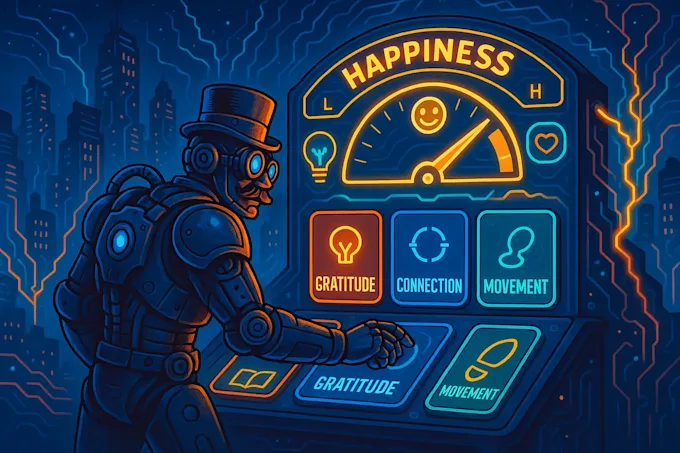
7 Psychological Tricks to Make Yourself Happy Today
Imagine spending your entire life chasing happiness, only to discover you've been running in the wrong direction. Think about it. Most people chase happiness through shopping, social media, or Netflix binges. But science shows these quick fixes are cheap dopamine. They spike your mood, then leave you feeling worse than before.
I learned this the hard way. I spent my teenage years devouring self-help books, desperately searching for answers. After reading dozens of books and testing techniques on myself, I discovered something crucial: we're getting dopamine from all the wrong places.
The real breakthrough came when I realized we need to shift our dopamine source from quick fixes to habits that actually help us grow. Instead of the temporary high from mindlessly scrolling social media, imagine getting that same dopamine hit from tiny habits that build your relationships, career, health, and mindset simultaneously.
Psychological tricks to make yourself happy aren't about faking a smile or forcing positivity. They're small, science-backed shifts that retrain your brain's default patterns so happiness becomes a habit instead of an accident. By working with gratitude, movement, connection, sleep, and your stress response, you can rewire the neural pathways behind how to make yourself happy for good.
Here's the game-changer: these small habits compound exponentially across all core areas of your life. The good news is your brain can be trained to be happier using simple, science-backed methods. Just like building muscle at the gym, you can strengthen your happiness through specific psychological tricks to make yourself happy that you can start using today.
In this guide, you'll learn:
Seven science-backed techniques to boost your happiness levels today
How to stop worrying and be happy using a technique clinical psychologists actually recommend
Easy ways to make these techniques automatic
A free system to track your progress
Ready to discover how to create lasting happiness? Let's begin.
Can You Really Trick Yourself Into Being Happy?
Before diving into specific techniques, let's address the elephant in the room: can you actually trick yourself into being happy? The short answer is yes, but not in the way most people think.
The word "trick" might make it sound like we're talking about fake-it-till-you-make-it positivity or forcing yourself to smile. That's not what works. Instead, you can strategically trick your brain into being happy by rewiring its circuits using proven psychological techniques that feel natural and sustainable.
Here's what most people don't realize: your brain is constantly being "programmed" anyway, by social media algorithms designed to keep you scrolling, by marketing messages that make you feel inadequate, and by stress patterns that become automatic. The question isn't whether your brain can be influenced, but whether you'll take control of that process or let it happen by accident.
The science backs this up. Your brain has a "negativity bias" that automatically focuses on problems and threats. But neuroscience shows your brain is "neuroplastic," meaning you can literally rewire it through consistent practice. The techniques you'll learn work because they create new neural pathways that make positive thinking and healthy behaviors more automatic. This is the real psychology of being happy: it's less about your circumstances and more about which mental pathways you practice using most.
If you want a deeper look at building that internal foundation, our guide on finding happiness within yourself breaks down how to stop depending on external circumstances for your mood.
Read More: How to Pretend to Be Happy

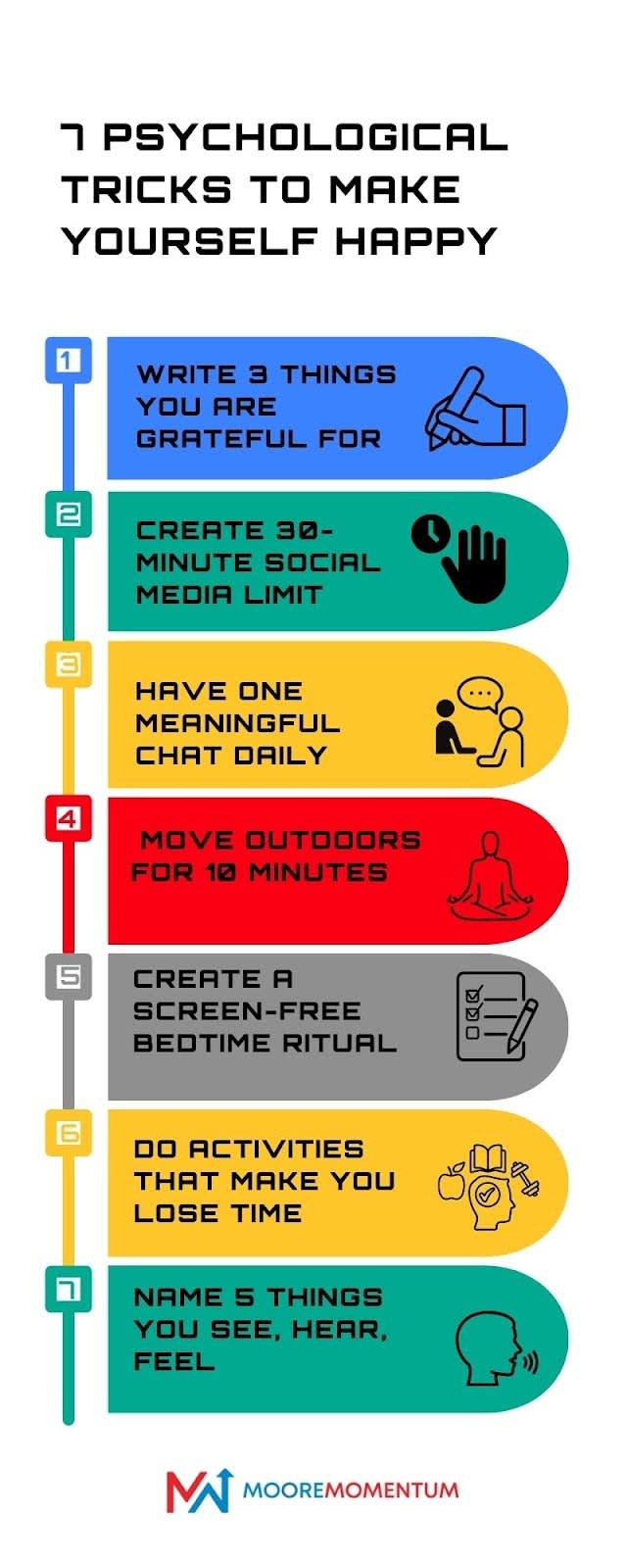
7 Science-Backed Psychological Tricks to Make Yourself Happy
1. Write 3 Things You Are Grateful For
Ever notice how most people focus on what's wrong instead of what's right? Here's the game-changer:
Dr. Robert Emmons from UC Davis conducted a landmark study published in the Journal of Personality and Social Psychology where participants who wrote down three things they were grateful for each week were 25% happier and reported better sleep quality compared to those who focused on hassles or neutral events.
Why It Works: Your brain can't focus on positive and negative thoughts at the same time. When you practice living in gratitude, you're literally forcing your mind to find the good in your life, creating new neural pathways that make positivity automatic.
To stick with it:
Make it Obvious: Place a notebook by your bed or keep the gratitude app front screen of your mobile. Use an app like Grateful or Reflectly, which sends gentle daily reminders and lets you quickly jot down what you're thankful for, making gratitude a consistent part of your routine.
Make it Easy: Start small. Thirty seconds is enough at first. Each morning, write down three specific things you're grateful for. Be detailed: instead of "my family," write "the way my daughter laughed during breakfast."
Make it Fun/Rewarding: Link it to something you already do, like drinking morning coffee. This technique is known as habit bundling. Learn more about it in Habit Bundling Hacks: How to Develop Good Habits Easily. For more ways to keep gratitude fresh instead of feeling like a chore, check out these fun gratitude activities for adults.
RELATED: How to Be a More Positive Person
2. Limit Your Daily Screen Time
Your phone might be making you unhappier than you realize. The average person checks their phone 96 times per day and spends over 7 hours looking at screens, and research shows this digital overload is directly linked to decreased happiness and increased anxiety.
A 2018 study published in the Journal of Social and Clinical Psychology found that limiting social media use to 30 minutes per day for just one week led to reduced loneliness and depression. Participants reported feeling significantly happier and more present in their daily lives.
Why It Works: Constant screen time floods your brain with artificial dopamine hits that make real-life experiences feel less rewarding. When you limit digital stimulation, your brain recalibrates to find joy in everyday moments: conversations, nature, and simple activities become more satisfying.
How to Make It Stick:
Make it Obvious: Put your phone in another room during meals and family time. Use analog alarm clocks instead of your phone to avoid morning scroll sessions.
Make it Easy: Start with "phone-free zones." Designate your bedroom and dining table as no-phone areas. Set specific times to check messages rather than constantly throughout the day.
Make it Fun/Rewarding: Replace mindless scrolling with activities you actually enjoy: read a book, call a friend, or take a walk. Track how you feel on low-screen days versus high-screen days.
MUST READ: What are Digital Habits
3. Apply the 5-Minute Connection Rule
As Dr. Robert Waldinger from Harvard's longevity study puts it: "Personal connection creates mental and emotional stimulation, which are automatic mood boosters, while isolation is a mood buster."
The same Harvard study found that people with strong social connections were 50% more likely to live longer and had significantly lower rates of depression and cognitive decline. Research also shows that performing acts of kindness releases oxytocin and activates the same reward centers in your brain as receiving kindness.
Commit to having at least one meaningful 5-minute interaction with someone important to you every single day. This isn't about small talk. It's about genuine connection where you're fully present, engaged, and looking for ways to show kindness or support.
Why It Works: Human brains are wired for connection and generosity. When you spend quality time with people you care about and actively look for ways to help or show kindness, your body releases oxytocin, the "feel good" hormone that reduces stress and boosts your mood.
To stick with this habit:
Make it Obvious: Add key relationship check-ins to your calendar. Schedule regular calls with family, coffee dates with friends, and important birthdays or anniversaries.
Make it Easy: Ask meaningful questions beyond "How are you?" and share something you're excited about. Focus on quality over quantity. Even a five-minute genuine connection can strengthen a relationship.
Make it Fun/Rewarding: Start a weekly ritual like Sunday family calls or walking meetups with friends. Put your phone away during these interactions to ensure full presence.
Read More: How to Heal from a Toxic Relationship
4. Try the 10-Minute Movement Boost
Here's a surprising fact: a 2018 study in The Lancet Psychiatry analyzing data from 1.2 million Americans found that just 10 minutes of physical activity can boost your happiness more effectively than many medications.
The study showed that people who exercised had 1.5 fewer days of poor mental health per month compared to those who didn't exercise. The sweet spot was 3-5 times per week for 30-60 minutes, but even 10 minutes showed significant benefits. Research also shows that exercising in nature provides additional mood benefits compared to indoor exercise.
Why It Works: Exercise floods your brain with endorphins, natural mood lifters that reduce stress and increase well-being. The 10-minute threshold appears to be the minimum effective dose for triggering these neurochemical changes.
How to Make It Stick:
Make it Obvious: Lay out your workout clothes the night before and place your sneakers by the door. Identify nearby parks, trails, or green spaces where you can move your body.
Make it Easy: Start with just 10 minutes of movement daily. Take outdoor walks instead of indoor treadmills, do jumping jacks in your backyard, or stretch on your balcony.
Make it Fun/Rewarding: Create an energizing playlist that you only listen to during your 10-minute movement sessions. Use the
Habit Tracker to track your daily movement and stay motivated and disciplined with reminders.
5. Master the 15-Minute Wind-Down Routine
Most people don't realize that getting enough sleep directly impacts your happiness levels. Poor sleep can make you more sensitive to negative emotions and reduce your ability to experience joy.
A 2020 study in Sleep Medicine Reviews found that well-rested individuals experience 31% higher levels of happiness and are better able to manage stress. Consistent sleep supports your body's natural circadian rhythm, helping to stabilize mood and energy levels.
Create a consistent 15-minute pre-sleep ritual that signals to your brain it's time to rest. This might include gentle stretching, reading, journaling, or meditation, but no screens or stimulating activities.
Why It Works: When you follow the same wind-down routine each night, your body learns to anticipate sleep and begins releasing melatonin naturally. This routine helps transition your nervous system from the day's stress into rest mode.
How to Make It Stick:
Make it Obvious: Create a sleep sanctuary by keeping your bedroom cool, dark, and clutter-free. Set up your wind-down materials in a visible bedside location.
Make it Easy: Choose 2-3 simple activities for your routine, such as 5 minutes of gentle stretching, 5 minutes of reading, and 5 minutes of deep breathing.
Make it Fun/Rewarding: Create a cozy ritual you look forward to. Use lavender essential oils, listen to calming music, or enjoy caffeine-free herbal tea.
Read More: 52 Life-Changing Habits Everyone Should Adopt
6. Find Your Natural Flow State
Ever lose track of time doing something you enjoy? That's called the "flow state," and it's a powerful source of happiness. The key is identifying which activities naturally create this state for you.
The Research: Dr. Mihaly Csikszentmihalyi's pioneering research on flow states found that people who regularly engage in flow activities report 40% higher well-being and significantly lower stress levels. Flow occurs when you're fully absorbed in an activity that challenges you just enough to keep you engaged.
How to Find Your Flow State: Look for activities where you experience three elements: you lose track of time, you feel completely focused and absorbed, and the activity feels naturally rewarding, not forced. Common flow activities include creative pursuits, sports, reading, cooking, or skilled work that matches your abilities.
Why It Works: Engaging in flow activities releases dopamine, a "feel-good" chemical in the brain that boosts motivation and happiness. When you're in flow, your brain enters a state of effortless concentration that naturally reduces stress and anxiety.
How to Make It Stick:
Make it Obvious: Create a dedicated space for your flow activities, whether it's a reading nook, craft corner, or music station. Keep equipment and supplies visible and easily accessible.
Make it Easy: Start with 20-30 minutes of uninterrupted time for your chosen activity. Turn off notifications and prepare your space beforehand to remove potential distractions.
Make it Fun/Rewarding: Experiment with different activities until you find ones that make you forget to check your phone. Block out specific times in your calendar for these activities.
Read More: Finding Clarity on What You Actually Want to Do With Your Life
7. Use the 5-5-5 Stress Method
Your body isn't designed to handle constant stress, but learning to manage it through self-care practices can dramatically improve your mood and overall health. Remember, taking care of your mental health isn't selfish. It's essential.
The Research: A 2021 meta-analysis in Clinical Psychology Review examining 58 studies found that people who practiced regular stress management techniques experienced a 28% reduction in anxiety and a 34% improvement in mood compared to control groups.
The 5-5-5 Stress Method: when you feel overwhelmed, stop and practice this self-care technique by engaging your senses: name 5 things you can see, 5 things you can hear, and 5 things you can physically feel, like your feet on the ground or the texture of your clothing. This grounds you in the present moment and interrupts the stress response.
Why It Works: This technique activates your parasympathetic nervous system (rest and digest mode) and pulls your attention away from stressful thoughts. It's a form of self-compassion that helps you respond to stress with kindness rather than harsh self-criticism. If that inner critic tends to be the loudest voice during stressful moments, our guide on building self-compassion instead of self-criticism pairs well with this technique.
How to Make It Stick:
Make it Obvious: Write "5-5-5" on a sticky note and place it somewhere you'll see when stressed: your computer monitor, car dashboard, or bathroom mirror.
Make it Easy: Practice the method during calm moments so it becomes automatic during stress. The entire process takes less than 60 seconds once you're familiar with it.
Make it Fun/Rewarding: Create a "calm down kit" with items that pleasantly engage your senses, maybe a favorite tea, a scented candle, or calming music. Track your stress levels and celebrate when you successfully use the method as an act of self-care.
Important Note: These techniques are based on positive psychology research and personal development principles. They are not intended to replace professional mental health treatment. If you're experiencing persistent depression, anxiety, or other mental health concerns, please consult with a qualified mental health professional.
How to Make Myself Happy When Depressed
Depression affects brain chemistry, not just mood, so traditional happiness advice often falls short. Start impossibly small with micro-activities: write one thing you're grateful for, walk to your mailbox, or text one person you care about. Research shows these 1-2 minute actions can improve mood over time.
Focus on three priorities first: sleep consistency (depression disrupts sleep, worsening everything), gentle movement (even 5 minutes affects brain chemistry), and professional support (essential healthcare, not weakness). Seek help if you experience persistent hopelessness lasting two weeks or more, loss of interest in activities, self-harm thoughts, or difficulty functioning in daily life. Crisis resources include 988 for suicide prevention and texting HOME to 741741 for crisis support.
Read More: The Difference Between Happiness and Contentment
Choosing the Right Psychological Tricks to Make Yourself Happy Using AI
Here's how to create your personalized plan:
Assess Your Current Factors: create these simple lists: Lifestyle Factors (work schedule, family commitments, morning person or night owl), Strengths (creativity, organization, communication), and Passions (reading, outdoor activities, cooking).
Use This AI Prompt Template:
"I want to increase my happiness by using techniques that fit my life. Here are my details: [insert your lists from above]. Please suggest the top 3 happiness-boosting techniques for me, considering my daily schedule and energy patterns, activities I naturally enjoy, current stress levels and well-being, and available time for new habits."
Analyze AI Recommendations: review the suggestions and choose the one that feels most natural to start, fits easily into your current routine, excites you to try, and addresses your biggest happiness challenge.
Conclusion: Psychological Tricks to Make Yourself Happy
I spent years stuck in the same failure loop: chasing quick, cheap dopamine hits from shopping, scrolling, and status, then wondering why the emptiness always came back heavier than before. What actually broke the cycle wasn't willpower. It was small, repeatable actions that rewired my brain's default response, one tiny win compounding into the next.
That's the part most people miss about happiness. It isn't a mood you wait for. It's a ripple effect. The moment you write down one thing you're grateful for, or take a 10-minute walk instead of reaching for your phone, you're not just fixing that one moment. You're sending a signal through every other part of your life: relationships get a little warmer, work gets a little clearer, your mindset shifts from "I can't" toward "I'm someone who's figuring this out." If you want to see how this plays out across every area of your life, not just your mood, our breakdown of the 5 pillars of holistic growth and happiness shows how that ripple effect compounds into lasting balance.
You now have seven powerful, science-backed tools for how to make yourself happy, from gratitude and movement to sensory grounding and a worry window that finally makes "stop worrying" possible. But knowing isn't enough. You need a system to make these changes stick, and a clearer sense of what actually makes a life worth living beyond the day-to-day mood boosts.
🚀 READY TO TURN THESE TRICKS INTO REAL MOMENTUM?
You now have seven science-backed psychological tricks to make yourself happy, plus a way to stop worrying and be happy for good. But knowing these tricks isn't enough. You need a system that keeps you consistent long after this article closes.
Here's the truth: these tricks work because they follow the same science the Moore Momentum System is built on. It takes gratitude, movement, connection, sleep, and stress management like the ones you just learned, and turns them into a personalized, AI-guided game so they actually stick instead of fading after a week. It expands beyond happiness alone to help you build momentum across all 5 Core Areas of your life.
👉 Take the Core Values Quiz to get your personalized Happiness Score in under 60 seconds. You'll instantly see which habits from this article matter most for you, and where your biggest friction points are hiding.
🚀🚀🚀 Don't forget to check out our Resource Arcade 👾🎮 for FREE templates and tools to gamify your habits. For more ways to build lasting happiness, explore what makes people happy next.

FAQs on Psychological Tricks to Make Yourself Happy
How Do I Trick My Brain Into Being Happy?
You trick your brain into being happy by repeating small, specific actions, like writing down gratitude, moving your body for 10 minutes, or limiting screen time, until they create new neural pathways. Your brain is neuroplastic, so consistent repetition of these psychological tricks to make yourself happy is what makes positivity feel automatic instead of forced.
What Is the Psychology of Being Happy?
The psychology of being happy is the study of how thoughts, habits, and brain chemistry interact to create lasting well-being. Rather than depending on circumstances, positive psychology research shows that consistent small habits, like gratitude, movement, connection, and sleep, are far stronger predictors of happiness than income or achievement.
How Do I Stop Worrying and Be Happy?
How to stop worrying and be happy starts with a technique called worry postponement, developed by Penn State psychologist Thomas Borkovec. Instead of trying to force worry away, you schedule a specific 15-30 minute "worry window" each day and gently postpone worries to that window whenever they arise outside of it. Research on this stimulus-control technique found people were able to significantly reduce their anxiety, stress, and depressive symptoms simply by containing worry to a set time rather than trying to eliminate it. Pair this with the 5-5-5 Stress Method above whenever a worry shows up outside your scheduled window.
How Long Before I Notice a Difference in My Happiness?
Most people notice small mood shifts within the first 1-2 weeks of consistently practicing even one of these tricks, like the gratitude habit or the 10-minute movement boost. Deeper, more lasting change, like the kind that rewires your default emotional patterns, tends to build over 30-90 days of consistent practice as the new neural pathways strengthen.


Founder & CEO of Moore Momentum
Will Moore is a serial entrepreneur, life coach, and habit science expert with a $300M+ exit under his belt. After hitting suicidal rock-bottom as a teen, he dedicated his life to cracking the code on lasting happiness and success — and built Moore Momentum to share what he found.
He helps people discover WHO they are, WHAT they really want, and HOW to get there by combining proven principles, science, AI, and gamification.
His mission: make growth ethically addictive and inevitable.